CNC Machining: A Comprehensive Guide to Understanding the Process
Discover the revolutionary world of CNC machining, where precision meets automation to transform modern manufacturing. Whether you’re an industry professional or simply curious about advanced manufacturing technologies, this comprehensive guide will walk you through the essentials of Computer Numerical Control (CNC) machining.
What is CNC Machining?
CNC machining represents a sophisticated manufacturing process where pre-programmed software controls factory tools and machinery. This technology has revolutionized traditional manufacturing by automating tool control through computer systems, eliminating manual operation requirements.
As a subtractive manufacturing method, CNC machining precisely removes material from solid blocks using computerized controls. The process creates complex three-dimensional shapes with exceptional accuracy and repeatability, making it indispensable for industries requiring high-precision components. Modern CNC systems operate across multiple axes simultaneously, enabling the production of intricate parts beyond manual capabilities.
The Basics of CNC Technology
CNC technology integrates computer intelligence with mechanical tools, creating a seamless bridge between digital design and physical manufacturing. Unlike conventional machinery requiring constant human guidance, CNC machines operate based on digital instructions, enabling automated production after initial programming.
- Command Function – interprets design data and converts it into mechanical actions
- Drive/Motion System – executes commands by controlling motors and actuators
- Feedback System – monitors machine position and speed, making micro-adjustments for precision
How CNC Machines Work
The operation begins with a digital blueprint created in Computer-Aided Design (CAD) software, which is then translated into machine-readable instructions through Computer-Aided Manufacturing (CAM) software. This process generates G-code, the universal language of CNC machines.
| Process Stage | Description |
|---|---|
| Design Phase | Creation of digital blueprint using CAD software |
| Programming | Translation into G-code via CAM software |
| Execution | Machine follows G-code instructions, removing material systematically |
| Monitoring | Continuous feedback sensors ensure accuracy during production |
Types of CNC Machines
Modern manufacturing facilities utilize various CNC machine types, each designed for specific tasks. From basic 3-axis systems to sophisticated 5-axis configurations, these machines offer distinct capabilities for different production requirements.
CNC Milling Machines
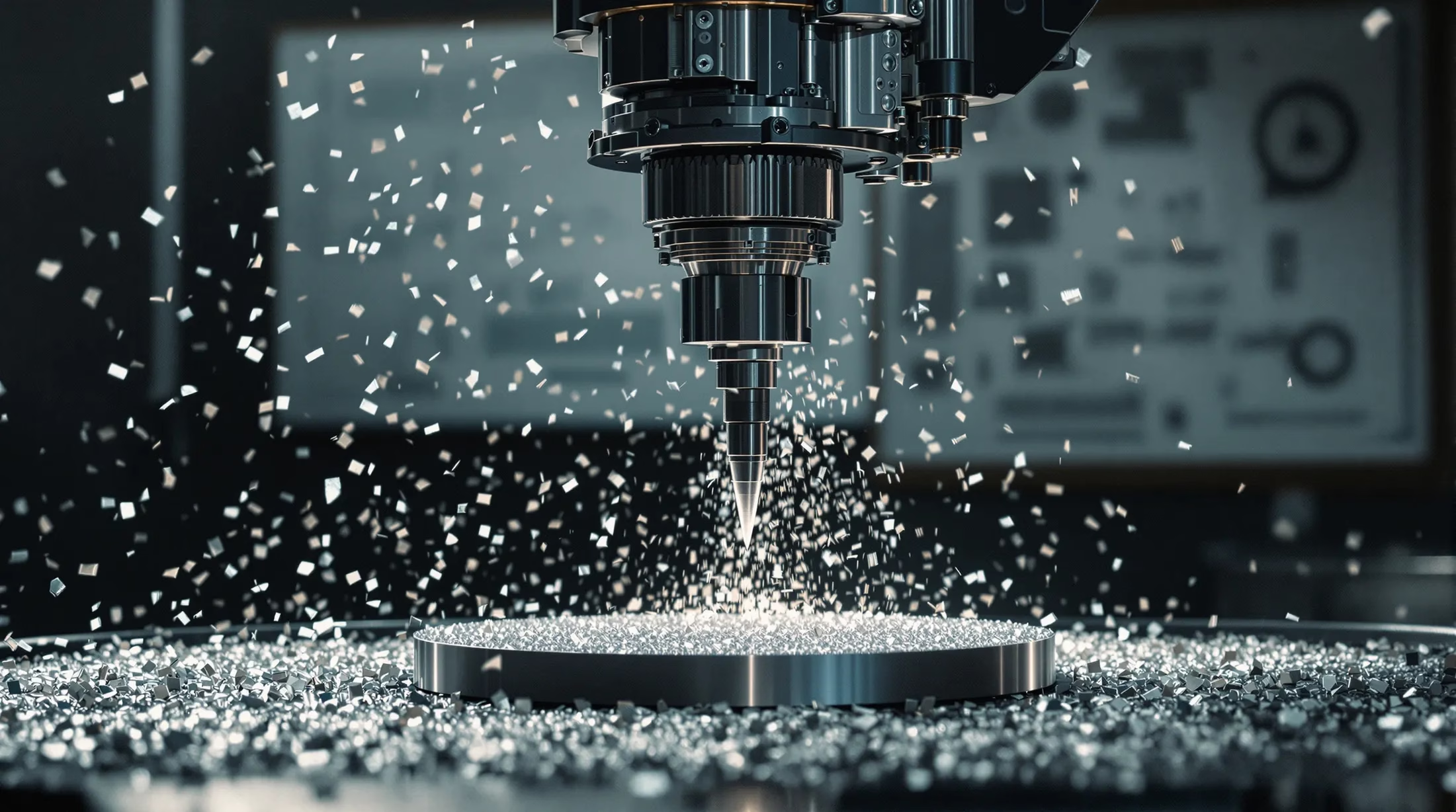
CNC milling machines use rotating cutting tools to remove material and create precise three-dimensional shapes. These versatile machines operate by moving cutting tools along multiple axes while the workpiece remains stationary.
- Vertical Mills – ideal for die work and detailed features on flat parts
- Horizontal Mills – excel at heavy material removal and large part processing
- 5-Axis Mills – enable complex geometries with simultaneous control across five axes
CNC Lathes and Turning Centers
CNC lathes specialize in creating cylindrical parts by rotating the workpiece against stationary cutting tools. Modern turning centers incorporate advanced features like:
- Live tooling for milling operations
- Sub-spindles for complex operations
- Multi-axis control capabilities
- Automated tool changing systems
- Integrated measurement systems
CNC Routers and Other Machines
CNC routers are specialized cutting machines optimized for working with softer materials like wood, plastics, composites, and aluminum. These machines feature high-speed spindles, vacuum table workholding systems, and larger work envelopes, making them perfect for furniture manufacturing, sign making, panel processing, and architectural components requiring intricate designs across large surfaces.
- CNC Plasma Cutters – utilize electrically charged gas to cut through conductive materials, particularly steel and aluminum plates
- CNC Laser Cutters – employ focused light beams for precise cutting and engraving, ideal for intricate detail work
- Wire EDM Systems – use electrical sparks to cut conductive materials with extreme precision, enabling complex shapes in hardened materials
- CNC Grinding Machines – provide ultra-precise surface finishing and dimensional control for high-tolerance components
Materials Used in CNC Machining
CNC machining’s remarkable versatility stems from its compatibility with diverse materials, establishing it as a fundamental technology across industries from aerospace to consumer electronics. Material selection critically influences product properties including strength, weight, thermal resistance, and cost-effectiveness. Each material requires specific tooling, speeds, and cutting strategies to optimize efficiency and quality, allowing manufacturers to balance performance requirements with budget constraints.
Common Metals for CNC Machining
| Metal Type | Key Properties | Primary Applications |
|---|---|---|
| Aluminum 6061 | Excellent thermal conductivity, corrosion resistance | Heat dissipation components, structural parts |
| Brass | Superior machinability, electrical conductivity | Electrical components, decorative items |
| Stainless Steel 304/316 | Exceptional corrosion resistance, strength | Medical devices, food processing equipment |
| Titanium | High strength-to-weight ratio, biocompatibility | Aerospace components, medical implants |
Plastics in CNC Machining
- ABS – excellent impact resistance and dimensional stability, ideal for prototypes and automotive components
- Nylon – exceptional toughness with low friction properties, perfect for gears and bearings
- PEEK – extraordinary heat resistance up to 480°F, suitable for aerospace and medical applications
- PVC – excellent chemical resistance for fluid handling components
- Polycarbonate – combines optical clarity with impact resistance
- PTFE (Teflon) – unmatched chemical resistance and low friction properties
Applications of CNC Machining
CNC machining has revolutionized manufacturing through its exceptional precision, versatility, and reliability. The technology excels in applications requiring tight tolerances and complex geometries, from prototype development to full-scale production. Its adaptability makes it ideal for both one-off prototypes and medium-volume production runs, particularly valuable for components with intricate designs and precise specifications across industries from consumer products to defense systems.
CNC Machining in Aerospace
The aerospace industry represents one of the most demanding applications for CNC machining, where precision, reliability, and material performance are non-negotiable requirements. The technology excels at creating critical structural components for aircraft, spacecraft, and satellite systems, featuring complex geometries that maximize strength while minimizing weight.
- Critical Components – structural elements with micron-level tolerances for flight safety
- Advanced Materials – specialized aerospace-grade materials including high-strength aluminum alloys, titanium, and Inconel
- Performance Features – exceptional strength-to-weight ratios, heat resistance, and durability under extreme conditions
- System Applications – aircraft control systems, engine parts, interior fixtures
- Maintenance Tools – specialized tooling for aircraft assembly and maintenance operations
Medical Applications of CNC Machining
| Application Type | Key Requirements | Materials Used |
|---|---|---|
| Surgical Instruments | Precision, sterilizability | Stainless Steel |
| Orthopedic Implants | Biocompatibility, strength | Titanium Alloys |
| Dental Prosthetics | Custom fit, durability | Medical-grade Plastics |
| Diagnostic Equipment | Accuracy, reliability | Various Metals/Plastics |
Medical device manufacturers leverage CNC machining’s versatility for creating patient-specific devices, revolutionizing personalized healthcare through custom implants and prosthetics. The technology’s capacity for small batch production proves particularly valuable in the medical sector, where specialized devices often require low volume production with absolute precision.
Quality and Precision in CNC Machining
CNC machining achieves exceptional accuracy through sophisticated computer control systems, utilizing mathematical coordinates in a Cartesian system. Modern CNC equipment routinely achieves tolerances as tight as ±0.001 inches (0.025mm), making it essential for applications requiring perfect component fit and function within extremely narrow parameters.
Understanding CNC Machining Tolerances
- Standard Metal Tolerances – approximately ±0.005 inches
- Plastic Component Tolerances – typically ±0.010 inches
- Ultra-Precision Tolerances – achievable down to ±0.001 inches for critical applications
- Cost Considerations – tighter tolerances increase production complexity and expenses
- Material Factors – thermal expansion and flexibility affect achievable tolerances
Quality Assurance Standards
Professional CNC machining operations implement comprehensive quality control measures throughout production. This includes advanced measurement tools like coordinate measuring machines (CMMs), optical comparators, and precision gauges for micron-level verification.
- ISO 9001:2015 – fundamental quality management framework
- AS9100D – aerospace-specific certification
- ISO 13485 – medical device manufacturing standard
- IATF 16949:2016 – automotive component certification
- ITAR Registration – defense-related compliance protocols
Challenges and Innovations in CNC Machining
While CNC machining offers tremendous benefits in precision and automation, manufacturers face several significant challenges when implementing this technology. Geometric complexity represents a primary consideration, as intricate designs with deep pockets, undercuts, or complex contours can dramatically increase machining costs. This occurs because complex geometries often require specialized tooling, multiple setups, and extended machining times. The most cost-effective applications generally involve simpler, more robust components where tool accessibility isn’t restricted by complex features.
- Initial Investment Costs – professional setup and equipment acquisition
- Programming Expertise – specialized knowledge requirements
- Tooling Requirements – extensive tool inventory needs
- Setup Complexity – multiple positioning and calibration steps
- Production Planning – strategic batch processing optimization
Overcoming CNC Machining Challenges
| Challenge | Solution | Benefits |
|---|---|---|
| Geometric Complexity | Design for Manufacturability (DFM) | Reduced machining time, improved efficiency |
| Setup Costs | Standardized Workholding Systems | Faster changeovers, reduced downtime |
| Production Efficiency | Multi-part Machining | Improved throughput, lower costs |
| Tool Changes | Quick-change Tooling Systems | Minimized downtime, increased productivity |
The Role of AI in CNC Machining
Artificial intelligence is revolutionizing CNC manufacturing by introducing unprecedented levels of adaptability and efficiency. Modern AI-enhanced CNC systems integrate extensive sensor networks that continuously monitor crucial parameters including cutting forces, vibration patterns, acoustic signatures, and thermal conditions. This real-time data collection enables the system to detect potential issues before they affect part quality or machine performance.
- Real-time Monitoring – continuous parameter tracking and adjustment
- Predictive Maintenance – early detection of potential failures
- Automated Optimization – self-adjusting cutting parameters
- Quality Verification – computer vision-based inspection
- Production Scheduling – AI-driven workflow optimization