Metal Fabrication: A Comprehensive Guide to Techniques and Applications
Discover the transformative world of metal fabrication, where raw materials become sophisticated components through precision engineering and skilled craftsmanship. This comprehensive guide explores the essential techniques, applications, and innovations that make metal fabrication a cornerstone of modern manufacturing.
Understanding Metal Fabrication
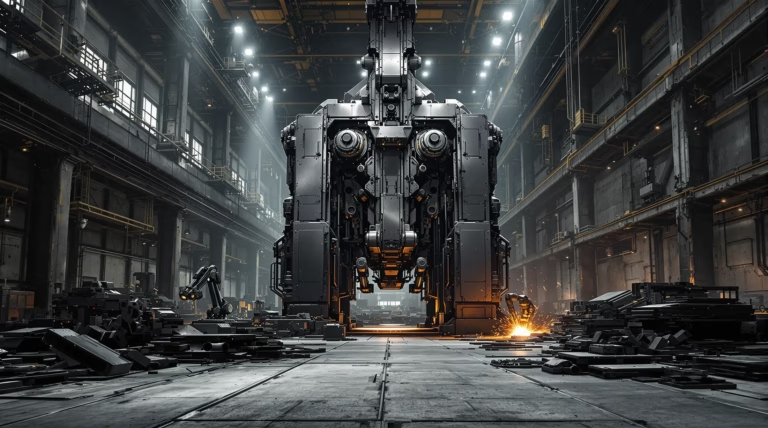
Metal fabrication transforms raw materials into functional structures and components through specialized manufacturing processes. This value-added process encompasses cutting, bending, welding, and assembly techniques to create everything from simple parts to complex machinery components. The industry serves as a foundation for numerous sectors, delivering custom metal products that meet precise specifications.
Professional fabricators combine technical expertise, precision engineering, and creative problem-solving to excel in their craft. Their comprehensive understanding of material properties, equipment capabilities, and industry standards ensures the production of high-quality components that meet rigorous performance requirements. This specialized knowledge has evolved significantly with technological advancements, making metal fabrication both an art and a science.
What is Metal Fabrication?
Metal fabrication systematically constructs metal structures and components through various manufacturing methods. Unlike single-technique processes, fabrication typically involves multiple operations:
- Cutting metal to precise dimensions
- Forming through bending or shaping
- Joining pieces via welding or fasteners
- Assembling components into finished products
- Quality control and testing
The process begins with detailed blueprints or CAD designs that guide production. Fabricators work with diverse metals including steel, aluminum, copper, brass, and various alloys, providing the flexibility to create specialized parts for unique applications that cannot be mass-produced through conventional methods.
Importance of Metal Fabrication in Various Industries
| Industry | Applications |
|---|---|
| Construction | Building frameworks, bridges, structural components |
| Automotive | Vehicle frames, body panels, engine components |
| Aerospace | Precision-engineered parts, lightweight components |
| Medical | Surgical instruments, implantable devices |
| Consumer Goods | Appliances, electronics housing |
Common Metal Fabrication Techniques
Metal fabrication employs diverse specialized techniques that transform raw materials into functional components. These processes require specific equipment, expertise, and safety protocols, with modern facilities integrating advanced technologies for enhanced precision and efficiency.
Cutting Techniques in Metal Fabrication
- Shearing – Clean separation of sheet metal using hydraulic or mechanical blades
- Laser Cutting – Achieves tolerances of ±0.005 inches with minimal heat affect
- Water Jet Cutting – Uses high-pressure water with abrasives for heat-free cutting
- CNC Plasma Cutting – Cost-effective for thick materials with good speed
- Band Sawing – Ideal for solid stock, tubing, and structural profiles
Bending and Shaping Metals
Metal bending operations transform flat materials into three-dimensional forms through controlled deformation processes. Press brakes serve as the primary tool for precision bending, utilizing hydraulic or mechanical force to press metal between specifically shaped dies. Modern CNC press brakes achieve positional accuracy within ±0.002 inches, enabling the production of complex components from sheet metal. For cylindrical shapes, roll bending machines curve sheet metal using adjustable rollers in progressive passes.
- Standard Bending Techniques – manual and powered hammering, stretch forming, tube bending
- Advanced Press Brake Operations – hemming (edge folding), beading (reinforcing ridges), flanging (edge forming)
- Critical Considerations – material springback properties, grain direction analysis, minimum bend radius calculations
- Quality Control Factors – preventing material cracking, maintaining structural integrity, ensuring dimensional accuracy
- Specialized Applications – custom profiles, architectural elements, structural components
Welding and Assembling
| Welding Process | Key Advantages | Best Applications |
|---|---|---|
| MIG (Metal Inert Gas) | Versatility and efficiency | Production environments |
| TIG (Tungsten Inert Gas) | Exceptional precision | Critical components |
| Stick Welding | Portability | Outdoor conditions |
| Resistance Spot Welding | High-volume capability | Sheet metal assembly |
Beyond welding, fabricators employ various assembly methods including mechanical fastening, adhesive bonding, and crimped seams. The assembly phase often represents the most labor-intensive aspect of fabrication, requiring precise dimensional control and strategic planning. Professional fabricators develop comprehensive assembly procedures incorporating fixturing and jigging techniques to maintain consistent quality throughout production.
Machining Processes
CNC machining represents the pinnacle of modern fabrication technology, delivering unmatched precision and repeatability. These computer-controlled systems perform complex operations including milling, turning, and drilling with accuracy to within 0.0001 inches. CNC machining centers execute intricate three-dimensional cutting paths while maintaining tight tolerances across production runs.
- Traditional Manual Operations – mills, lathes, drill presses for prototype and specialized work
- Surface Finishing Methods – grinding, honing, polishing for specific tolerances and aesthetics
- Integration Capabilities – combining machining with forming and cutting processes
- Quality Assurance – dimensional verification, surface finish inspection, tolerance validation
- Production Flexibility – accommodating both small and large production volumes
Materials Used in Metal Fabrication
The selection of materials in metal fabrication directly impacts project success, determining both fabrication methods and final product performance. Key material categories include plate metal, formed and expanded metal, tube stock, structural profiles, and sheet metal. Supporting materials such as welding consumables and fasteners play essential roles in component assembly.
- Selection Criteria – strength-to-weight ratio, corrosion resistance, thermal properties
- Performance Factors – electrical conductivity, machinability, cost-effectiveness
- Environmental Considerations – temperature exposure, chemical resistance, mechanical stress
- Economic Aspects – material costs, processing requirements, lifecycle value
- Application Requirements – industry standards, safety regulations, performance specifications
Steel Fabrication
Steel maintains its position as the fundamental material in metal fabrication, offering exceptional versatility and strength. Structural steel components, including I-beams, channels, and angles, provide essential building elements, while sheet steel serves diverse applications from automotive to appliance manufacturing. Carbon steel delivers strength and weldability at competitive prices, with stainless variants offering superior corrosion resistance for specialized applications.
- Cutting Methods – plasma cutting, oxy-fuel for heavy plate steel
- Forming Techniques – precision press brake operations, advanced forming for AHSS
- Welding Processes – MIG, TIG, stick welding for robust connections
- Applications – structural components, automotive parts, industrial equipment
- Material Properties – high strength, excellent weldability, cost-effectiveness
Aluminum and Copper Fabrication
Aluminum fabrication has revolutionized multiple industries through its exceptional strength-to-weight ratio, corrosion resistance, and thermal conductivity. With just one-third the density of steel, aluminum enables the creation of lightweight yet durable structures essential for aerospace, transportation, and portable equipment. Its natural oxide layer provides built-in corrosion protection, eliminating additional protective coating requirements in many environments.
- Aluminum Fabrication Considerations – controlled cutting speeds to prevent gumming
- Welding Requirements – specialized filler materials for thermal conductivity management
- Key Properties – superior strength-to-weight ratio, natural corrosion resistance
- Primary Applications – aerospace components, transportation structures, portable equipment
- Technical Challenges – oxide formation, heat management during processing
| Copper Properties | Primary Applications | Fabrication Requirements |
|---|---|---|
| Electrical conductivity | Electrical components | Precise temperature control |
| Thermal transfer | Heat exchangers | Specialized cutting equipment |
| Antimicrobial properties | Plumbing systems | Annealing processes |
| Durability | Architectural elements | Silver-bearing solders |
Modern fabrication facilities employ advanced CNC technology for both aluminum and copper processing, enabling the production of increasingly complex and precise components. These technological advancements have significantly improved manufacturing capabilities, meeting the exacting demands of contemporary applications while maintaining consistent quality standards across production runs.
Applications of Metal Fabrication
Metal fabrication forms the cornerstone of industrial manufacturing, transforming raw materials into essential components through specialized processes including cutting, bending, welding, and assembly. This versatile field enables the creation of custom-engineered products across diverse sectors, from microscopic components to massive structural frameworks. The continuous advancement of manufacturing technologies has expanded fabrication capabilities, allowing for unprecedented precision, efficiency, and design complexity while optimizing material usage and production costs.
Metal Fabrication in the Automotive Industry
- Primary Applications – chassis components, engine parts, structural elements
- Key Techniques – precision stamping, hydroforming, robotic welding
- Safety Features – crash protection structures, reinforced frames
- Modern Demands – battery enclosures for EVs, fuel cell components
- Material Innovation – advanced high-strength steels, aluminum alloys, composite structures
Aerospace and Metal Fabrication
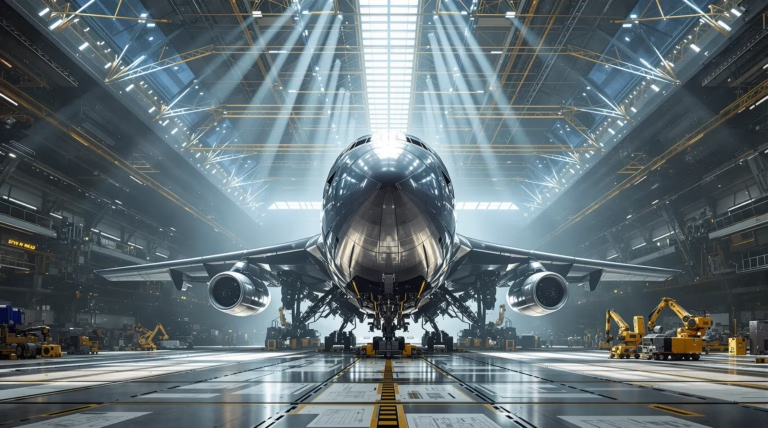
Aerospace applications demand the highest precision and quality in metal fabrication, where component reliability is critical. Aircraft manufacturers utilize specialized processes for creating structural elements that must combine minimal weight with maximum strength. Advanced techniques include superplastic forming and diffusion bonding for titanium structures, while space exploration components require exceptional durability for extreme conditions.
- Critical Requirements – micron-level tolerances, radiation resistance
- Specialized Processes – precision CNC machining, advanced forming techniques
- Quality Control – comprehensive material traceability, non-destructive testing
- Space Applications – pressure vessels, propellant tanks, structural components
- Environmental Considerations – vacuum compatibility, temperature fluctuation resistance
Construction and Manufacturing Uses
The construction industry relies heavily on metal fabrication for creating structural elements that form modern buildings and infrastructure. From massive bridge sections to decorative façade elements, fabricators produce components to precise specifications off-site, improving quality control while reducing construction time and costs. Manufacturing facilities depend on fabricated metal equipment for material handling systems, custom workstations, and specialized fixtures, supporting efficient production across industries.
Safety Practices in Metal Fabrication
Metal fabrication inherently involves hazardous processes that demand rigorous safety protocols. The combination of heavy machinery, extreme temperatures, sharp materials, and powerful tools creates multiple potential risks requiring systematic management. Regulatory bodies like OSHA have established comprehensive guidelines covering machine guarding, ventilation systems, personal protective equipment, and emergency procedures.
- Risk Assessment Components – hazard identification, evaluation protocols, control measures
- Safety Program Elements – regular audits, equipment maintenance schedules, job safety analysis
- Performance Metrics – incident rates, near-miss reporting, compliance tracking
- Cost Benefits – reduced downtime, lower compensation costs, minimized liability
- Program Implementation – training protocols, documentation systems, continuous improvement
Ensuring a Safe Working Environment
| Environmental Control | Purpose | Implementation |
|---|---|---|
| Ventilation Systems | Fume removal and air quality | Local and general exhaust |
| Noise Control | Hearing protection | Barriers and dampening |
| Lighting | Visibility enhancement | Task-specific illumination |
| Floor Planning | Traffic management | Marked zones and exits |
Personal protective equipment serves as the final defense against workplace hazards. Essential items include specialized eye protection, hearing protection, flame-resistant clothing, cut-resistant gloves, and appropriate footwear. Comprehensive training ensures workers understand both the proper use of safety equipment and the underlying reasons for each protective measure, fostering a culture where safety becomes instinctive rather than imposed.
Modern Technologies in Metal Fabrication
Technological advancement has transformed metal fabrication, introducing sophisticated equipment that combines computer control with mechanical precision. These innovations have democratized high-precision manufacturing, enabling fabricators of all sizes to compete effectively in previously exclusive markets.
- Digital Integration Benefits – seamless workflow management, reduced errors, optimized production
- Production Monitoring – real-time metrics tracking, material usage optimization, performance analysis
- Sustainability Impacts – reduced waste generation, lower energy consumption, improved resource utilization
- Supply Chain Effects – shortened lead times, enhanced responsiveness, global market access
- Quality Improvements – consistent tolerances, reduced defects, automated inspection processes
The Role of CNC in Metal Fabrication
CNC technology has revolutionized fabrication processes through automated, precise operations. These systems interpret digital designs to control cutting tools with micron-level accuracy, enabling complex geometries while maintaining consistent tolerances. The technology spans multiple processes, from cutting and routing to pressing and machining, fundamentally changing how metal products are conceived and produced.
Automation and Robotics
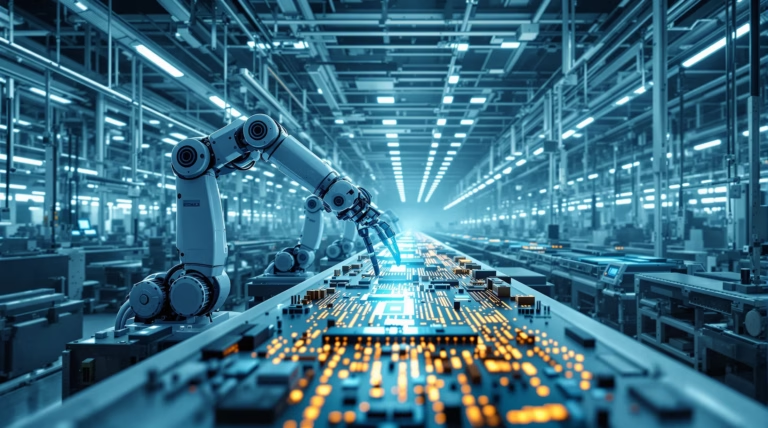
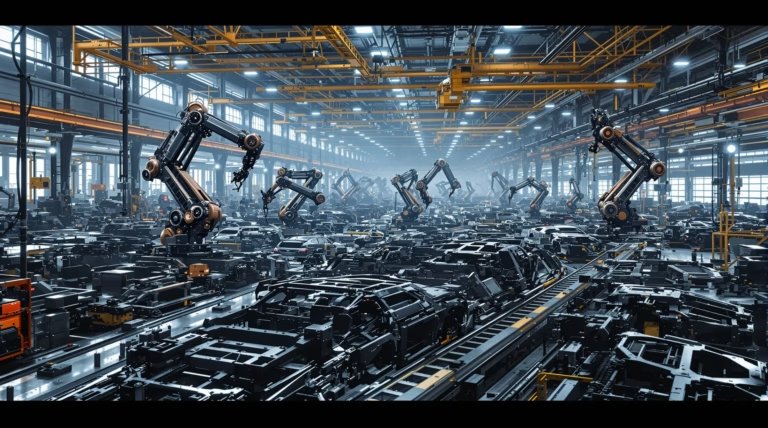
Advanced robotic systems handle repetitive, demanding, and hazardous tasks with unprecedented precision. Equipped with specialized end effectors, these systems excel in applications like welding, where they maintain perfect torch angles and travel speeds throughout complex operations. Integrated automation extends to material handling, quality control, and collaborative operations, enabling lights-out manufacturing and flexible production cells that dramatically improve throughput while maintaining exceptional quality standards.
Challenges and Solutions in Metal Fabrication
Despite technological advancements, metal fabrication continues to present significant challenges that require innovative solutions and expert knowledge. The intersection of design ambition and manufacturing reality creates complex technical hurdles while meeting demanding customer specifications.
- Design Limitations – material constraints, production capabilities, equipment restrictions
- Manufacturing Realities – physical process limitations, machinery constraints, material behavior
- Quality Control – specification compliance, consistency maintenance, defect prevention
- Process Integration – workflow optimization, equipment compatibility, system coordination
- Resource Management – material utilization, time efficiency, cost effectiveness
Overcoming Common Challenges
| Challenge Area | Impact | Solution Approach |
|---|---|---|
| Tolerance Management | Dimensional accuracy | Statistical process control, precision tooling |
| Thermal Distortion | Structural integrity | Strategic weld sequencing, heat management |
| Material Variation | Production consistency | Comprehensive material databases, real-time monitoring |
| Quality Assurance | Product reliability | Simulation software, predictive analysis |
Future Trends in Metal Fabrication
The metal fabrication industry is experiencing a transformative shift driven by emerging technologies and evolving market demands. While traditional workforce roles show some decline, the industry is advancing through automation, digitalization, and advanced manufacturing technologies that demand specialized expertise in programming, data analysis, and system optimization.
- Technological Integration – artificial intelligence, augmented reality, simulation software
- Smart Manufacturing – interconnected systems, real-time tracking, automated scheduling
- Workforce Evolution – specialized skills development, technical expertise, digital competency
- Process Innovation – flexible production, complex component capability, resource optimization
- Industry 4.0 Implementation – data-driven operations, predictive maintenance, automated quality control
Sustainability Efforts
Environmental responsibility has become integral to modern metal fabrication operations. Companies implement comprehensive management systems addressing material sourcing, waste reduction, and energy efficiency. Advanced initiatives include regenerative drive systems, LED lighting upgrades, and smart power management, significantly reducing operational carbon footprints.
| Sustainability Area | Implementation | Benefits |
|---|---|---|
| Material Optimization | Advanced nesting software | 30% waste reduction |
| Process Innovation | Water-based solutions | Reduced VOC emissions |
| Resource Management | Closed-loop systems | Minimized consumption |
| Product Design | Sustainability-focused engineering | Enhanced recyclability |
Technological Innovations
Additive manufacturing stands at the forefront of transformative innovations in metal fabrication. Unlike traditional subtractive methods, additive techniques construct components layer by layer, enabling previously impossible geometries. Hybrid systems combining both approaches have emerged as particularly valuable tools, allowing fabricators to:
- Build complex structures through additive processes
- Maintain tight tolerances with precision machining
- Optimize prototyping operations
- Enhance repair capabilities
- Execute specialized production runs efficiently
Advanced sensing technologies integrated with fabrication equipment create unprecedented quality assurance capabilities. Real-time monitoring systems employ:
| Technology | Application | Benefit |
|---|---|---|
| High-definition cameras | Visual inspection | Immediate defect detection |
| Thermographic imaging | Heat distribution analysis | Process optimization |
| Acoustic sensors | Sound pattern monitoring | Quality consistency |
| Machine learning algorithms | Data analysis | Parameter refinement |
Choosing the Right Metal Fabrication Service
Selecting an appropriate metal fabrication partner represents a strategic decision that impacts project success, product quality, and operational efficiency. The industry’s diversity ranges from specialized boutique shops to large-scale automated facilities, each offering distinct advantages for specific project requirements.
Factors to Consider
- Experience and Expertise – proven track record, industry-specific knowledge, relevant certifications
- Service Range – design assistance, prototyping capabilities, finishing options, assembly services
- Quality Control – material sourcing practices, inspection procedures, ISO certifications
- Production Capacity – equipment capabilities, workflow management, delivery reliability
- Communication – responsive customer service, clear channels, project management approach
Glossary of Metal Fabrication Terms
Metal fabrication encompasses a specialized vocabulary essential for effective communication across the supply chain. This technical language continues to evolve with technological advancements, incorporating both traditional terms and new concepts from digital fabrication and automation.
Cutting and Forming Terms
| Process | Description | Application |
|---|---|---|
| Laser Cutting | Focused light beam cutting | Precise cuts with minimal heat affect |
| Plasma Cutting | High-temperature ionized gas cutting | High-speed conductive metal cutting |
| Waterjet Cutting | Pressurized water/abrasive cutting | Heat-sensitive applications |
| Press Brake Bending | Sheet metal forming between tools | Angular geometry creation |
| Roll Forming | Progressive profile shaping | Continuous profile production |
Welding and Joining Vocabulary
| Welding Process | Technical Name | Characteristics |
|---|---|---|
| MIG Welding | Gas Metal Arc Welding (GMAW) | Continuous wire electrode, shielding gas, strong clean welds |
| TIG Welding | Gas Tungsten Arc Welding (GTAW) | Non-consumable tungsten electrode, high-precision, thin materials |
| Stick Welding | Shielded Metal Arc Welding (SMAW) | Flux-coated electrode, versatile outdoor use |
Metal joining terminology extends beyond welding to include various mechanical fastening methods. Riveting utilizes deformed metal pins for component joining, while brazing employs a lower melting point filler material to unite base metals.
- Penetration – depth of fusion into the base metal
- Porosity – trapped gas bubbles in solidified weld metal
- Heat-affected zone – area altered by welding heat but not melted
- Distortion – dimensional changes from welding heat
- Spatter – ejected molten metal particles
- Weld reinforcement – excess weld metal beyond surface plane
Quality and Specification Terms
Quality assessment in metal fabrication relies on specific terminology for precise communication of standards and specifications. Tolerance encompasses various geometric characteristics:
- Dimensional tolerance – allowable variation from specified measurements
- Flatness tolerance – permissible surface deviation from perfect plane
- Straightness tolerance – acceptable deviation from true line
- Positional tolerance – allowed variation in feature location
- Surface finish – texture quality measured in microinches or micrometers (Ra values)
Non-destructive testing (NDT) methods provide quality verification without component damage:
| Inspection Method | Application |
|---|---|
| Ultrasonic Testing | Internal defect detection |
| Magnetic Particle Inspection | Surface and near-surface flaw identification |
| Liquid Penetrant Testing | Surface discontinuity detection |
| First Article Inspection | Initial production item evaluation |