Manufacturing Equipment: Essential Types and Upgrades for Your Business
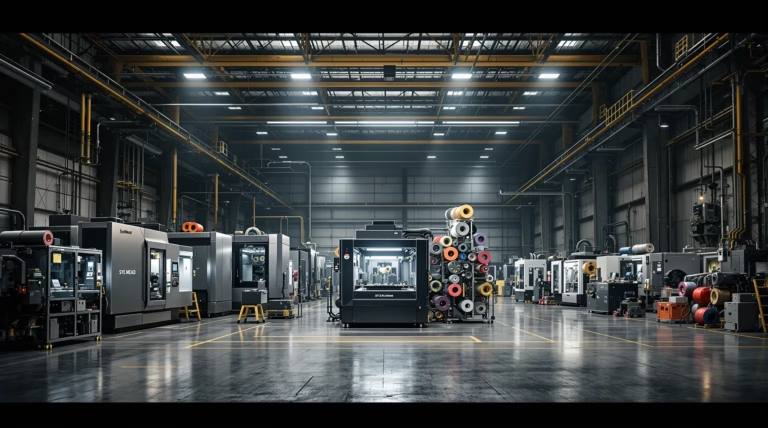
In today’s rapidly evolving industrial landscape, selecting the right manufacturing equipment can make the difference between market leadership and falling behind the competition. Let’s explore how modern manufacturing equipment shapes production efficiency and drives business success.
Understanding Manufacturing Equipment: An Overview
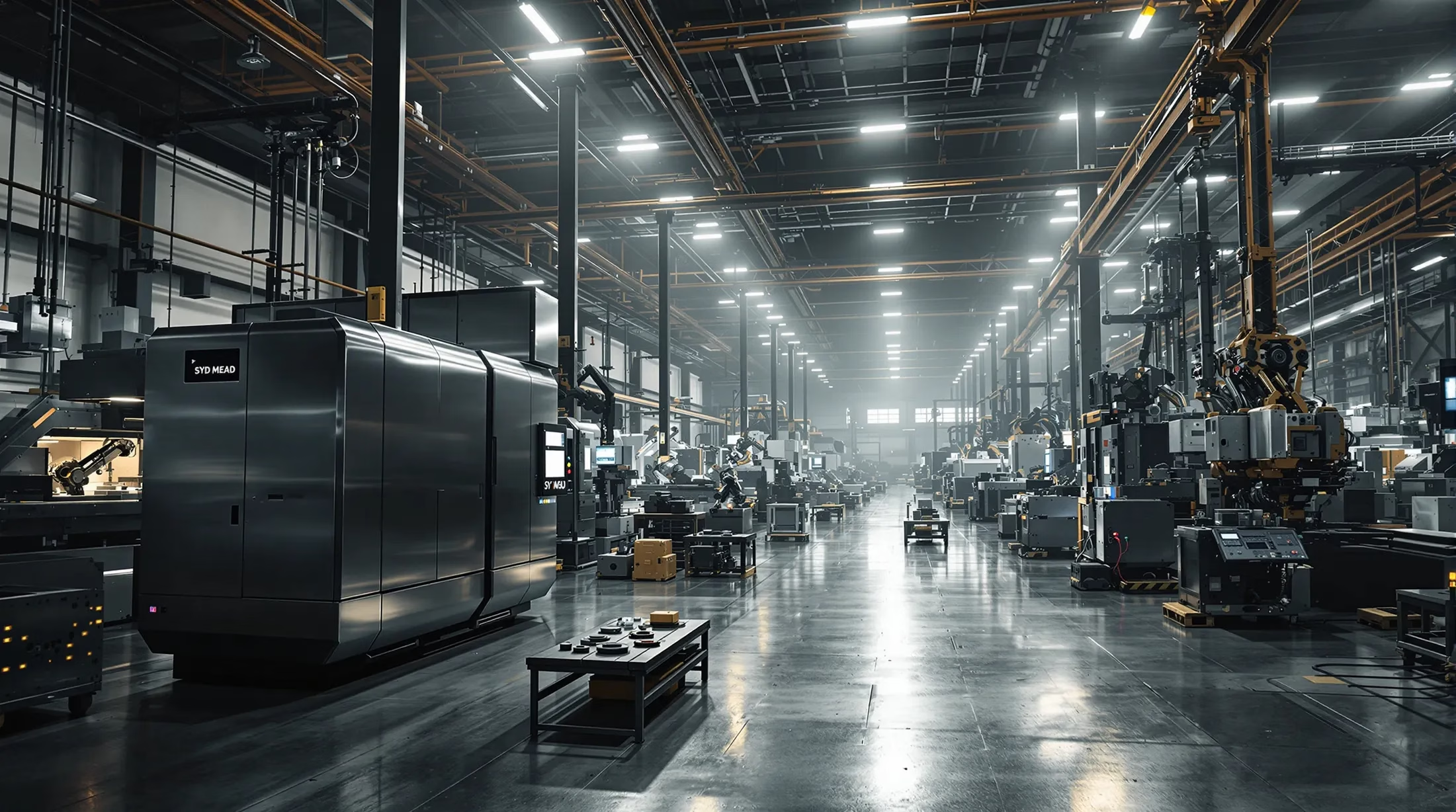
Manufacturing equipment forms the backbone of modern industrial operations, serving as the critical infrastructure that transforms raw materials into finished products. From simple hand tools to sophisticated automated systems, these machines enable businesses to meet production demands efficiently while maintaining quality standards. In today’s competitive marketplace, having the right manufacturing equipment isn’t just an operational necessity—it’s a strategic advantage that can significantly impact a company’s bottom line through enhanced production efficiency and cost reduction.
As manufacturing technologies evolve, businesses face important decisions about which equipment investments will provide the greatest returns. The global manufacturing equipment market continues to grow, driven by technological advancements, increasing automation, and the need for greater precision and reliability. Companies that understand the various equipment types and their applications can make informed decisions that align with their production goals, scale of operations, and long-term business strategies.
The Importance of Manufacturing Equipment in Modern Production
Modern production systems rely on specialized machinery to maintain consistency, meet tight tolerances, and achieve the output volumes necessary to satisfy market demands. Without appropriate equipment, manufacturers struggle to maintain the rhythm of production required in industries where just-in-time delivery and rapid fulfillment have become standard expectations.
- Determines production speed and capacity limits
- Influences product quality and consistency
- Affects labor requirements and utilization
- Impacts facility’s overall efficiency
- Controls production scheduling flexibility
Key Benefits of Investing in Quality Manufacturing Equipment
| Benefit Category | Impact |
|---|---|
| Cost Reduction | Up to 30% reduction in scrap rates, lower maintenance costs, improved energy efficiency |
| Productivity Gains | 15-25% improvement through higher operating speeds and reduced setup times |
| Quality Assurance | Tighter tolerances, more consistent output, fewer customer returns |
| Operational Efficiency | Reduced downtime, lower repair frequency, improved material utilization |
Essential Types of Manufacturing Equipment for Your Business
Modern manufacturing operations rely on specialized equipment to maintain competitive advantage in today’s fast-paced market. Selecting the right manufacturing equipment for your business is crucial for optimizing production processes, enhancing product quality, and maximizing operational efficiency. The most advanced facilities utilize a combination of technologies, including Surface Mount Technology (SMT) and Through-Hole Technology (THT) equipment, to deliver reliable products to customers with consistent quality and timely delivery.
CNC Machines: Precision and Efficiency
Computer Numerical Control (CNC) machines represent the gold standard in precision manufacturing across multiple industries, including aerospace, automotive, electronics, and construction. These sophisticated systems leverage mathematical coordinates and computing power to achieve unprecedented levels of accuracy in manufacturing operations.
- Achieves micron-level precision consistently
- Reduces floor space requirements
- Minimizes material waste
- Operates continuously with minimal human intervention
- Improves production scheduling flexibility
Industrial Robots: Automating Production
Industrial robots have transformed manufacturing by automating repetitive, dangerous, and precision-critical tasks that previously required extensive human labor. These versatile machines range from simple pick-and-place units to sophisticated multi-axis systems capable of performing complex assembly operations with microscopic precision. The integration of industrial robots typically delivers a 30-50% increase in production speed compared to manual processes, while maintaining unwavering quality standards regardless of operational duration.
- Continuous operation in hazardous environments
- Enhanced workplace safety through automation
- Consistent quality across all production shifts
- Reduced labor costs and improved efficiency
- Integration capabilities with existing systems
3D Printers: Revolutionizing Manufacturing
3D printing technology has fundamentally disrupted traditional manufacturing by enabling direct production of complex components from digital designs without tooling or molds. This additive manufacturing approach creates intricate geometries that would be impossible or cost-prohibitive using conventional methods. The technology now spans diverse materials including plastics, metals, ceramics, and biological substrates, offering unprecedented flexibility for businesses with complex design requirements or low-to-medium production volumes.
| Advantage | Business Impact |
|---|---|
| Reduced Tooling Costs | Lower barriers to market entry and product development |
| Rapid Prototyping | Accelerated innovation cycles and faster market response |
| On-Demand Production | Minimized inventory costs and customization capabilities |
| Design Freedom | Enhanced product innovation and competitive advantage |
Injection Molding Machines: Mass Production Solutions
Injection molding machines excel in mass-producing plastic components with exceptional consistency and efficiency. These systems can manufacture thousands of identical parts daily, from simple bottle caps to complex automotive components. The versatility extends across various thermoplastics and engineered resins, adapting to specific application requirements while maintaining precise quality standards.
- Dramatic cost reduction in high-volume production
- Advanced control systems for optimized cycle times
- Efficient material usage and energy consumption
- Exceptional part consistency and quality
- Wide range of material compatibility
Upgrading Your Manufacturing Equipment: Key Considerations
Upgrading manufacturing equipment represents a strategic investment that can dramatically transform business operations and market position. The process requires thoughtful analysis of workflow patterns, facility constraints, and integration capabilities with existing systems. Successful upgrades result from comprehensive audits that identify bottlenecks, maintenance issues, and energy inefficiencies in current equipment.
The Role of Automation in Modern Manufacturing
Automation has revolutionized manufacturing by integrating robotics, smart controls, and process automation throughout production floors. These technologies deliver unprecedented levels of precision and consistency while reducing labor costs by 40-60% compared to manual operations. Modern automation solutions enable 24/7 production capabilities, significantly increasing equipment utilization rates and overall output capacity.
- AI-powered adaptive machining capabilities
- Collaborative robot integration options
- Digital workflow optimization
- Flexible production system adaptation
- Enhanced supplier relationship management
Environmental Sustainability in Equipment Design
Modern eco-friendly manufacturing equipment incorporates advanced technologies that deliver significant environmental benefits while maintaining optimal performance. These systems achieve 15-30% energy savings compared to previous generations through energy-efficient motors, precision controls, and intelligent power management systems.
- Reduced water consumption in process operations
- Minimized use of hazardous materials in components
- Design optimized for eventual recycling
- Integration of renewable materials where feasible
- Waste reduction systems during operation
- Smart power management capabilities
Cost-Benefit Analysis of Equipment Upgrades
| Benefit Category | Impact Areas |
|---|---|
| Direct Financial | Acquisition costs, installation expenses, operational savings |
| Productivity | Reduced setup times, decreased maintenance, improved yield rates |
| Quality | Lower warranty costs, enhanced product consistency |
| Operational | Reduced training requirements, improved interface usability |
| Strategic | Enhanced market positioning, sustainability credentials |
Successful manufacturers typically target payback periods of 2-3 years for major equipment investments, though this varies by industry and application. The most effective analyses consider both immediate operational benefits and long-term strategic advantages, enabling businesses to prioritize upgrades that deliver the greatest overall impact on performance and competitive positioning.
Conclusion: Optimizing Your Production Line with the Right Equipment
Strategic equipment selection and implementation drives operational excellence through enhanced output volumes, superior quality standards, and improved cost efficiency. Companies that systematically evaluate and upgrade their equipment infrastructure gain remarkable agility in responding to market demands while maintaining consistent product quality.
The combination of CNC machines, industrial robots, and specialized equipment creates production systems that minimize waste, reduce downtime, and maximize resource utilization. These efficiency gains translate into competitive advantages across multiple dimensions, from faster delivery times to improved profit margins. As manufacturing technology evolves, businesses maintaining strategic focus on equipment optimization position themselves effectively in global markets.