DIY Solar Panel Cleaning: Simple Steps to Maximize Efficiency
Ready to boost your solar panel efficiency and save money on professional cleaning services? Regular maintenance of your solar panels is crucial for maximizing your renewable energy investment. Let’s explore how you can effectively clean your solar panels and maintain optimal performance through simple DIY methods.
Why DIY Solar Panel Cleaning is Important
Maintaining your solar panels through regular DIY cleaning is essential for maximizing your renewable energy investment. Over time, dust, pollen, bird droppings, and other environmental debris accumulate on panel surfaces, creating a barrier between the sun’s rays and the photovoltaic cells. This buildup can significantly reduce your system’s efficiency—by as much as 25% in particularly dirty conditions—directly impacting your energy production and utility savings.
Taking the DIY approach to solar panel cleaning not only saves you money on professional services but also allows you to monitor your system’s condition firsthand. Regular maintenance extends the lifespan of your panels, preventing premature degradation and potential system failures.
Understanding Solar Panel Efficiency
Solar panel efficiency refers to how effectively your panels convert sunlight into electricity. Most residential systems operate at 15-22% efficiency when new and clean, meaning they convert that percentage of available solar energy into usable power.
- A thin film of dust can reduce efficiency by 5%
- Thicker accumulations from pollen and leaves can cause 15-25% losses
- Regular cleaning helps maintain optimal conversion rates
- Clean panels ensure faster return on investment
- Proper maintenance maximizes power generation capacity
Impact of Dirt and Debris on Solar Panels
| Issue | Impact |
|---|---|
| Dust Particles | Creates microscopic shadows, causes hot spotting |
| Organic Matter | Can damage protective glass surface, highly acidic |
| Hardened Deposits | Difficult to remove, requires special cleaning |
| Financial Impact | 7-15% reduction in annual energy production |
Tools and Materials Needed for DIY Solar Panel Cleaning
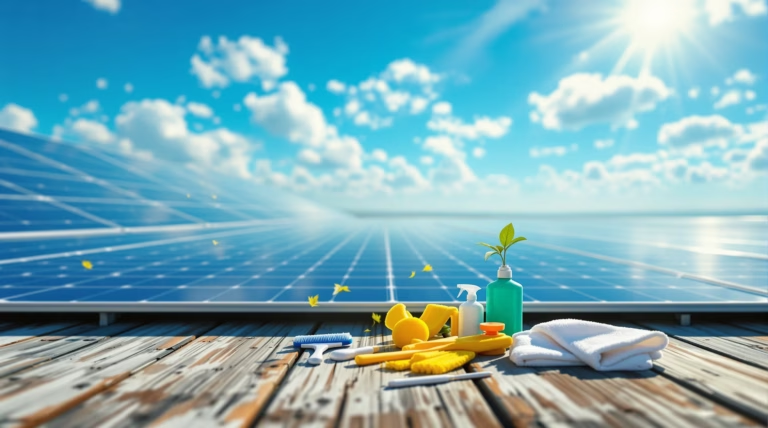
Effective DIY solar panel cleaning requires specific tools that balance thoroughness with gentleness. The right equipment ensures quick, effective cleaning without risking damage to your valuable investment.
Essential Cleaning Tools
- Soft-bristle brush with extended handle
- Squeegee with telescoping handle
- Spray bottle for cleaning solution
- Garden hose with gentle spray nozzle
- Microfiber cloths or non-abrasive sponges
- Safety equipment (ladder, non-slip shoes, safety harness)
- Water-fed pole system (optional)
Environmentally Friendly Cleaning Solutions
The ideal cleaning solution should effectively remove dirt without leaving residue or damaging the panel surface. Here are two recommended eco-friendly solutions:
- Deionized water (preferred option)
- Mild soap solution: 1/4 teaspoon gentle dish soap + 2 cups water
- Vinegar solution: 1/4 cup white vinegar + 2 cups deionized water
Step-by-Step Guide to Cleaning Your Solar Panels
Proper DIY solar panel cleaning requires a methodical approach to ensure both safety and effectiveness. Following a structured routine not only protects your valuable investment but also maximizes your system’s energy production. Always consult your manufacturer’s guidelines and warranty information before beginning any cleaning work.
Step-by-Step Guide to Cleaning Your Solar Panels
Preparing for the Cleaning Process
Safety comes first when preparing to clean solar panels. Start by completely shutting down your solar panel system according to manufacturer guidelines to prevent electrical hazards. Schedule cleaning for early morning or evening hours when panels are cool to avoid thermal shock damage from cold water on hot glass.
- Check weather forecast for mild conditions
- Prepare cleaning solution in advance
- Position ladder on level ground
- Consider using extension tools for ground-level cleaning
- Avoid cleaning during extreme heat or high winds
Cleaning Techniques for Optimal Results
| Step | Technique |
|---|---|
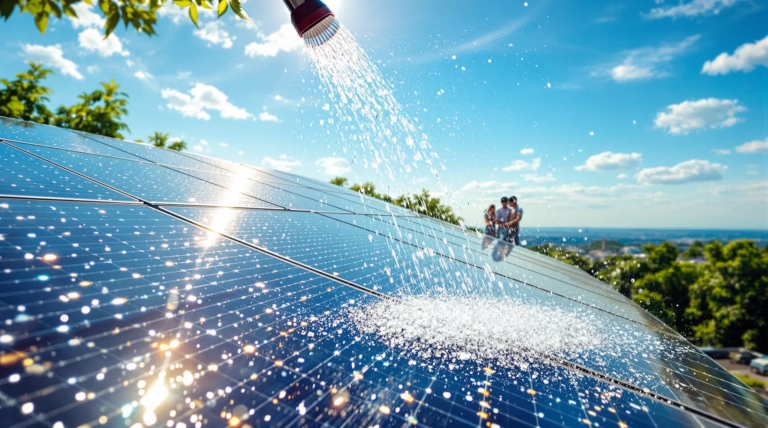
| Initial Rinse | Use normal water pressure with spray nozzle from ground level |
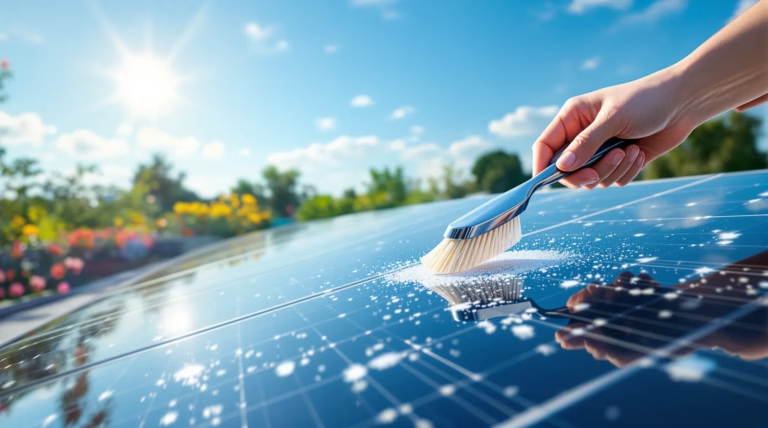
| Stubborn Dirt | Apply soft-bristle brush in gentle circular motions |
| Final Rinse | Remove all soap residue thoroughly |
| Drying | Use squeegee with extension pole, top to bottom |
Monitor your system’s performance before and after cleaning to measure efficiency improvements. Many homeowners experience a 5-15% boost in energy production following a thorough cleaning session, validating the importance of regular maintenance.
Safety Tips for DIY Solar Panel Cleaning
While cleaning solar panels can enhance efficiency and reduce costs, safety should never be compromised. The most effective approach for homeowners is using extended water-fed poles with soft brush attachments from ground level, eliminating roof access risks entirely.
- Always shut down the system before cleaning
- Clean during overcast days or early mornings
- Avoid cleaning hot panels
- Use proper safety equipment
- Follow manufacturer guidelines
Avoiding Common Hazards
Roof access presents the greatest risk in solar panel maintenance, with falls accounting for most serious injuries. If ground-level cleaning isn’t possible, use proper safety equipment including harnesses and non-slip footwear, and always have a spotter present.
- Avoid metal-handled tools
- Never clean during thunderstorms
- Use appropriate water pressure
- Prevent water ingress between panels
- Consider professional help for high or steep roofs
How Often Should You Clean Your Solar Panels?
Professional recommendations suggest cleaning solar panels at least once or twice annually, though specific circumstances may require more frequent maintenance. In many areas, natural rainfall maintains panels at approximately 95% efficiency, but regular monitoring of system performance provides the best indicator for cleaning needs.
Factors Influencing Cleaning Frequency
| Factor | Impact on Cleaning Schedule |
|---|---|
| Climate | Rainy regions need less frequent cleaning; arid areas require quarterly maintenance |
| Location | Proximity to trees, agriculture, or coast affects debris accumulation |
| Panel Angle | Steeper angles require less cleaning than flat installations |
| Seasonal Changes | Spring often requires more attention due to pollen and bird activity |