Manufacturing Blueprint: A Comprehensive Guide to Understanding and Utilizing Blueprints
Manufacturing blueprints represent the cornerstone of modern production processes, transforming complex design concepts into actionable manufacturing instructions. Whether you’re a seasoned engineer or new to the manufacturing industry, understanding these technical documents is essential for ensuring product quality and production efficiency.
Understanding Manufacturing Blueprints
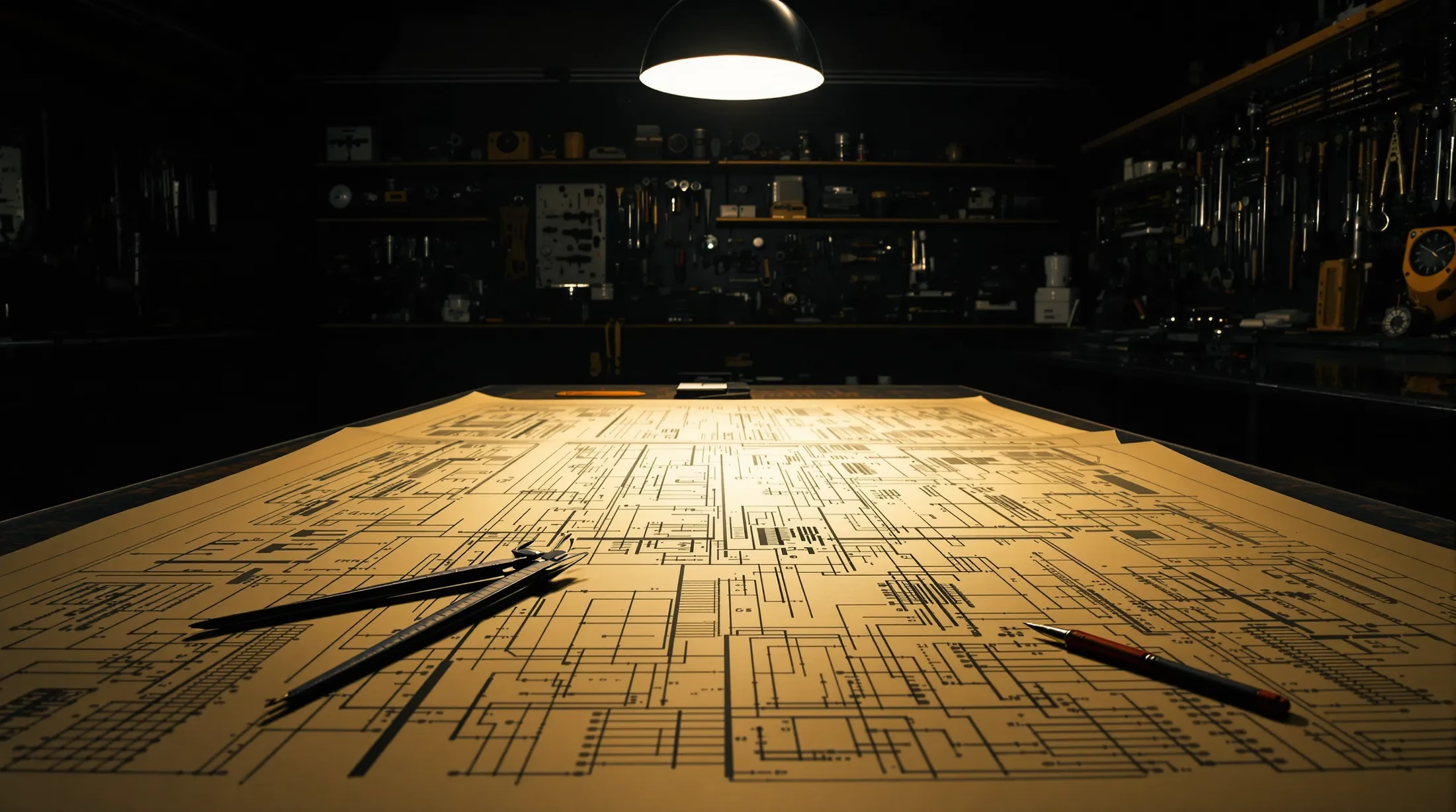
Manufacturing blueprints serve as detailed technical drawings that guide the production process. These precise documents communicate product design, dimensions, and specifications across design, engineering, and production teams. Professional draftspeople or specialized CAD software create these blueprints using standardized scales and symbols, establishing clear production procedures and quality standards.
What is a Manufacturing Blueprint?
A manufacturing blueprint is a comprehensive engineering drawing that details product specifications and production requirements. These documents contain standardized symbols, notations, and multiple views that effectively communicate complex information to manufacturing teams. As valuable intellectual property, blueprints provide exact instructions for creating, assembling, and operating specific products, ensuring consistency across production runs.
Key Components of a Blueprint
Every manufacturing blueprint contains several standardized elements essential for production:
- Title Block – Located in the bottom right corner, containing part name, drawing number, creation date, and company details
- Revision Block – Tracks design changes with dates and authorization information
- Bill of Materials (BOM) – Lists all required components, including part numbers, quantities, and materials
- Legend – Explains scale, measurement units, and specialized symbols
- Technical Specifications – Details measurements, tolerances, and material requirements
Types of Lines and Projections in Blueprints
| Line Type | Purpose |
|---|---|
| Thick Solid Lines | Visible edges of finished components |
| Dotted/Dashed Lines | Hidden edges and internal structures |
| Centerlines | Center of circular features or symmetrical parts |
| Dimension Lines | Critical measurements with arrow endpoints |
The Importance of Blueprints in Manufacturing
Manufacturing blueprints form the foundation of successful production processes, providing comprehensive visual instructions for product creation. These technical documents ensure consistent quality, minimize material waste, and reduce production time when properly interpreted and implemented.
Ensuring Manufacturing Accuracy
Accuracy in manufacturing depends on precise adherence to blueprint specifications, particularly regarding dimensional tolerances. Quality control processes begin with blueprint validation, using precision measurement tools like calipers, micrometers, and coordinate measuring machines (CMMs). This systematic approach creates a continuous feedback loop that improves manufacturing accuracy and reduces rework requirements.
Benefits of Using Blueprints
- Enhanced Communication – Standardized visual references eliminate misunderstandings between design and production teams, accelerating decision-making processes
- Streamlined Workflow – Clear production sequences, tool requirements, and assembly instructions reduce manufacturing time while maintaining quality
- Quality Control – Precise specifications provide objective criteria for consistent product evaluation across all team members
- Training Efficiency – Simplified onboarding and training processes for new staff members
- Regulatory Compliance – Standardized documentation ensures adherence to industry regulations
- Inventory Management – Accurate material specifications improve resource allocation and stock control
Modern Technologies in Blueprint Utilization
Industry 4.0 has revolutionized manufacturing blueprints, transforming them from static documents into dynamic, data-rich assets. These smart blueprints now incorporate embedded sensors, QR codes, and augmented reality markers, creating seamless connections between physical components and their digital counterparts. Advanced facilities integrate blueprint specifications directly with procurement, inventory management, and production scheduling systems, enabling adaptive manufacturing that responds to market demands while maintaining strict quality standards.
Integrating Industry 4.0 with Blueprints
Digital blueprint systems have transformed workplace efficiency through mobile accessibility and real-time communication. Workers now access technical specifications through tablets, smart glasses, and mobile devices, maintaining productivity at their workstations. Computer-aided manufacturing (CAM) systems translate blueprint data directly into machine instructions, programming CNC machines and automated assembly systems with minimal human intervention.
Augmented reality systems enhance assembly processes by overlaying digital blueprint information onto physical components, providing unprecedented clarity for complex procedures. This integration enables immediate problem-solving and reduces production downtime through direct communication between operators and engineering teams.
Predictive Maintenance and Blueprints
| Feature | Benefit |
|---|---|
| Real-time Monitoring | Continuous comparison of component performance against design parameters |
| Data Analytics Integration | Pattern identification between design specifications and maintenance needs |
| Feedback Loop Creation | Continuous improvement of future design specifications |
| Maintenance Optimization | Precise scheduling based on actual performance data |
Best Practices for Handling and Storing Blueprints
Effective blueprint management requires standardized protocols that protect these valuable technical documents while ensuring quick accessibility. Organizations implementing comprehensive management systems benefit from reduced search times, eliminated risks of outdated specifications usage, and enhanced intellectual property protection. Whether maintaining physical or digital formats, successful blueprint preservation depends on balancing accessibility with security measures and appropriate storage conditions that prevent deterioration.
Proper Filing and Handling Techniques
- Handling Protocol – clean, dry surfaces and washed hands or cotton gloves required to prevent oil and dirt transfer
- Transportation Methods – protective carriers or tubes to prevent creasing and environmental damage
- Storage Requirements – flat file cabinets for small documents, suspended racks with protective sleeves for larger formats
- Environmental Controls – temperature maintained at 65-70°F (18-21°C), relative humidity at 40-50%
- Organization System – standardized nomenclature for labeling and systematic check-out procedures
These comprehensive management approaches ensure document longevity while maintaining clear readability of critical dimensions and notes. Implementing proper tracking systems creates accountability and guarantees documents return to appropriate storage locations after use, protecting these valuable manufacturing assets.
Digital Storage Solutions for Blueprints
| Feature | Advantage |
|---|---|
| PLM Systems | Centralized repositories with version control and approval workflows |
| Security Measures | Multi-factor authentication and encrypted data transmission |
| Cloud Integration | Redundant backups and multi-location accessibility |
| Data Management | Regular integrity checks and scheduled backups |
Modern organizations typically implement hybrid approaches during digital transformation, maintaining critical physical archives while developing comprehensive digital libraries. This strategy enhances collaboration and accessibility across global manufacturing operations while ensuring data security and preservation. The combination of physical and digital storage solutions provides optimal protection and utility for essential blueprint documentation.